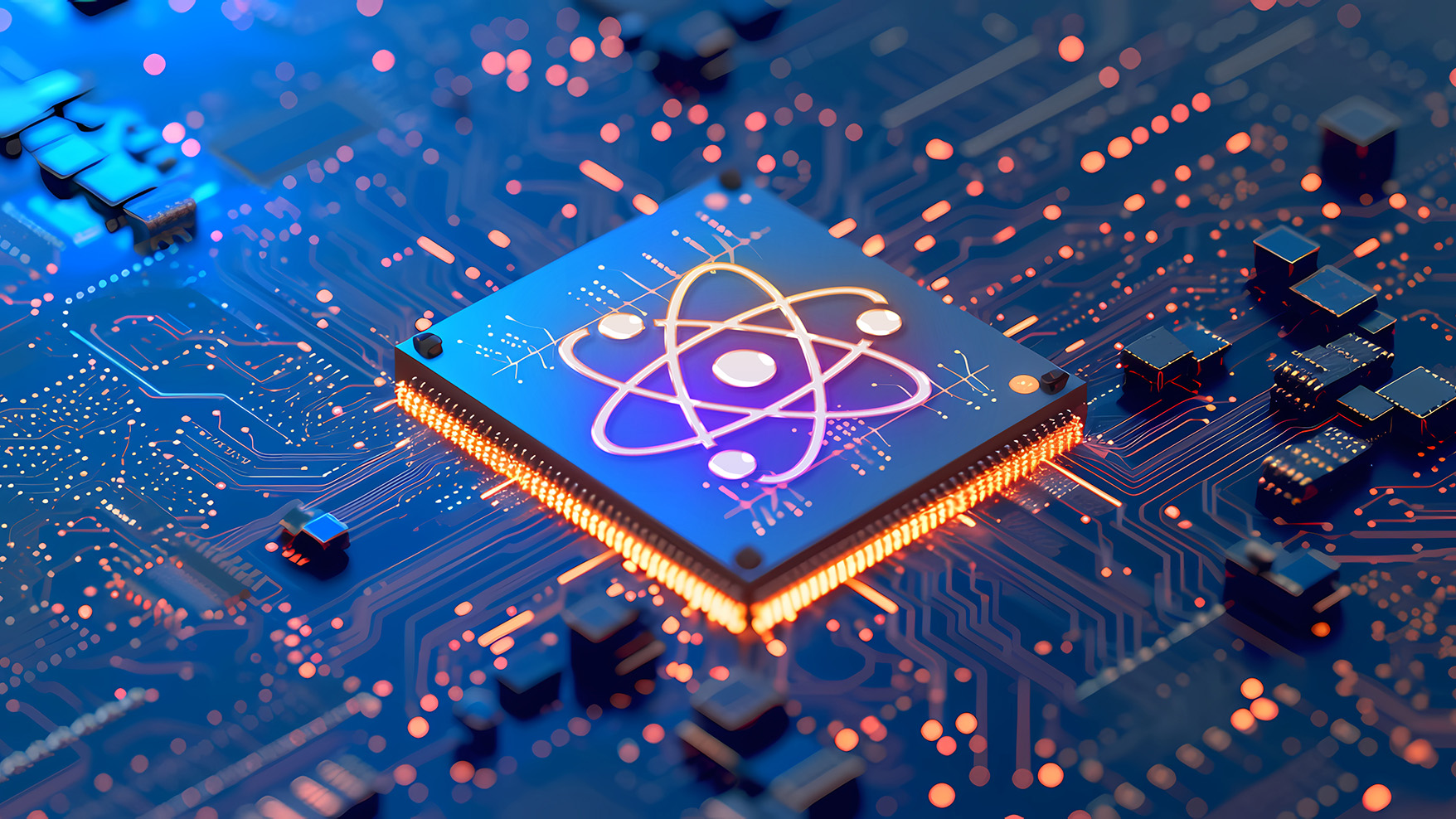

Demystifying the complex world of quantum computing, exploring its fundamental principles, potential applications, and current challenges.
The Quantum Leap: Understanding Quantum Computing
Quantum computing is no longer a futuristic fantasy confined to the realm of theoretical physics. It's rapidly becoming a tangible technology with the potential to revolutionize various industries. But what exactly is quantum computing, and how does it differ from the classical computers we use every day?
At its core, classical computing relies on bits, which can represent either a 0 or a 1. Quantum computers, on the other hand, utilize qubits. What makes qubits revolutionary is their ability to exist in multiple states simultaneously – a concept known as superposition. Imagine a coin spinning in the air; it's neither heads nor tails until it lands. A qubit is similar, existing in a combination of 0 and 1 until it's measured.
Another key quantum phenomenon is entanglement. When two or more qubits become entangled, their fates are intertwined, no matter how far apart they are. Measuring the state of one entangled qubit instantaneously determines the state of the others.
Why the Hype? Potential Applications
The unique properties of superposition and entanglement allow quantum computers to perform certain calculations far more efficiently than even the most powerful supercomputers today. This opens up exciting possibilities across various fields:
- Drug Discovery and Materials Science: Simulating molecular interactions with unprecedented accuracy to design new drugs and materials.
- Financial Modeling: Developing more sophisticated risk analysis and trading algorithms.
- Cryptography: Breaking current encryption methods (and developing new, quantum-resistant ones).
- Artificial Intelligence: Accelerating machine learning algorithms and enabling new forms of AI.
- Optimization Problems: Finding optimal solutions for complex logistical challenges, such as traffic flow and supply chain management.
The Challenges Ahead
Despite the immense potential, quantum computing is still in its early stages. Building and maintaining stable qubits is incredibly challenging due to their sensitivity to environmental noise (decoherence). Scaling up the number of qubits while maintaining their coherence is another significant hurdle.
Furthermore, programming quantum computers requires a fundamentally different approach than classical programming, necessitating the development of new quantum algorithms and programming languages.
The Future is Quantum
While widespread adoption is still some years away, the progress in quantum computing is undeniable. As researchers and engineers continue to overcome the current limitations, we can expect quantum computers to play an increasingly significant role in solving some of the world's most complex problems. The quantum leap is happening, and its impact will likely be profound.